
Arriving in Dar es Salaam: Visa, SIM Card, Money and Getting Into Town
The practical arrival guide for Dar es Salaam: visa on arrival versus e-visa, yellow fever rules, where to change money, which SIM to buy, what a taxi from Julius Nyerere airport should cost, and the mistakes visitors make in the first hour.
Dar es Salaam7 min readUpdated 26 August 2026
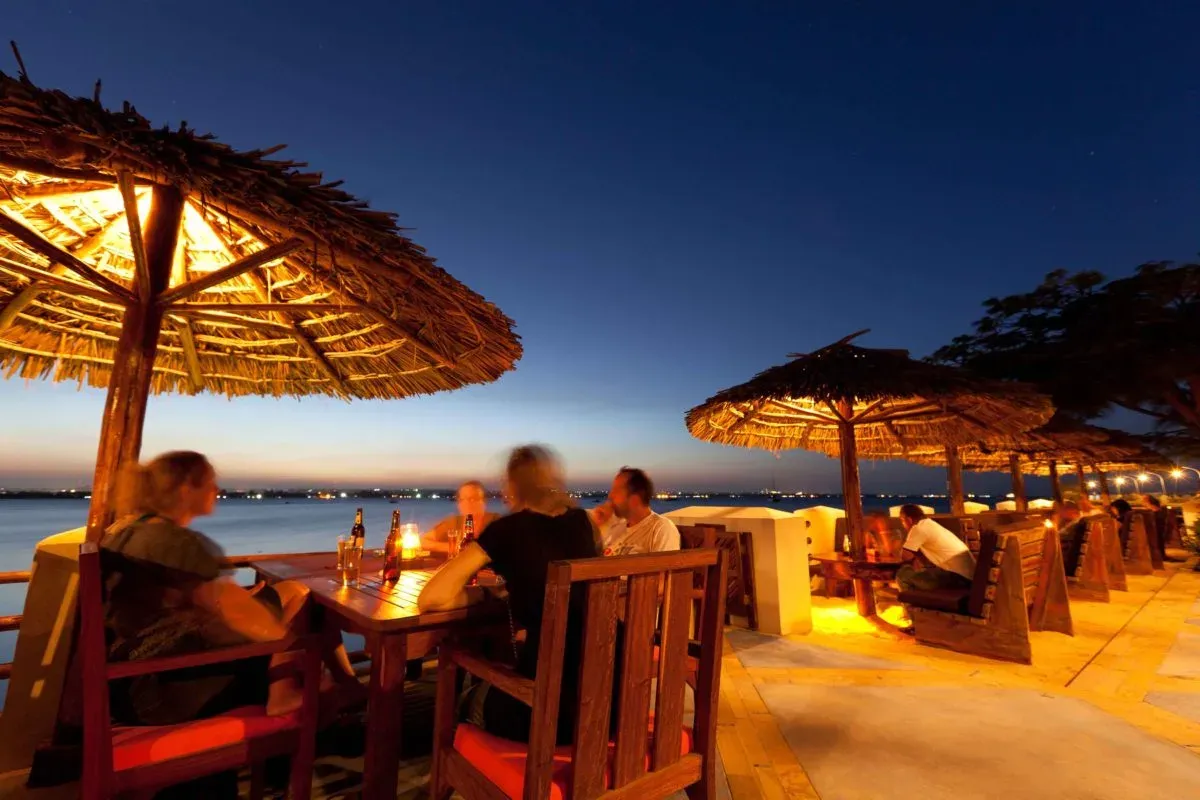
The first hour in a new country is where most of the money gets wasted and most of the avoidable stress happens. Dar es Salaam is a straightforward arrival, but it has a few specific traps. Here is the whole thing in order.
Before you fly
Visa
Most visitors need one. There are two routes.
The e-visa, applied for online in advance through the Tanzanian immigration service, is the route the government pushes and the one that saves you the arrivals queue. Allow at least a couple of weeks. You will need a passport scan, a photo, your flight details and an address in Tanzania.
Visa on arrival is available to most nationalities at Julius Nyerere International, paid in US dollars, cash. It works. It is also the slowest part of the airport on a busy evening, and there are nationality-specific wrinkles — US citizens, for instance, are issued the multiple-entry class rather than the ordinary tourist one.
Visa policy changes, and it changes without much notice. Verify the current rule for your specific passport on the official Tanzanian immigration site before booking, not from any article, including this one.
Your passport needs at least six months of validity and a blank page.
Yellow fever
Required only if you are arriving from or transiting a country with risk of transmission. Direct from Europe or North America, you will not be asked. Routing through certain African hubs, you will. Check your transits, not just your origin — a layover can trigger the requirement.
Insurance and health
Malaria is present on the coast year round. Speak to a travel clinic about prophylaxis well before you go, and bring repellent with DEET. Standard travel vaccinations plus typhoid and hepatitis A are the usual recommendation.
At the airport
Julius Nyerere International (DAR) has Terminal 3 for most international arrivals and Terminal 2 for domestic and some regional flights. They are not adjacent. If you have a connecting domestic flight to Zanzibar, Arusha or a safari strip, confirm which terminal it leaves from, because the transfer takes real time.
Order of operations
- Immigration. E-visa holders to the fast queue, visa-on-arrival to the payment desk first.
- Cash. Skip the airport exchange bureaux and use a bank ATM in the arrivals hall. Rates are better. Withdraw enough for a day or two.
- SIM card. There are official operator desks in arrivals. If the queue is bad, get one in town.
- Transport. Out of the building before you commit to anything.
Money
The currency is the Tanzanian shilling (TZS). Notes come in large numbers, which takes a day to stop feeling strange.
Use bank ATMs — CRDB, NMB, Exim, Stanbic, Absa — rather than exchange bureaux. They are widespread, they accept international cards, and the rate is simply better. There is a per-withdrawal cap and a fee, so take out a reasonable amount at a time.
Bring US dollars as a backup, in clean, unmarked, post-2013 notes. Older or damaged notes are refused routinely and without discussion. Dollars are used for visas, national park fees, the Zanzibar ferry and some hotel bills, and larger denominations get a better rate than small ones.
Cards work at hotels, malls, supermarkets and better restaurants. They do not work at markets, island boats, dala-dalas, most taxis, museums or street food. Keep cash, and keep small notes — nobody has change for a 10,000 note at a fruit stall.
M-Pesa and Tigo Pesa run the country's everyday economy through mobile money. As a short-term visitor you probably will not set it up, but it explains why so many places would rather take a phone transfer than a card.
SIM cards and data
Get a local SIM. Roaming here is punitive and data is extremely cheap locally.
| Network | Best for |
|---|---|
| Vodacom | Widest national coverage, including the parks |
| Airtel | Strong in cities, often cheaper data bundles |
| Halotel | Budget option, thinner coverage |
Buy from an official branded shop, with your passport. Registration is legally required and involves a fingerprint capture, so a proper shop has to do it — anyone selling you a pre-registered SIM off a table is selling you a problem. The whole process takes about fifteen minutes and a data bundle costs a few dollars for the week.
If you are going on safari afterwards, Vodacom is the one.
Getting into town
The airport sits west of the centre. The peninsula is roughly 45 minutes without traffic and can be two hours with it.
Bolt or Uber is the cheapest and least stressful option, typically around half of what an airport taxi will quote. Both operate throughout the city. Some airport pickup restrictions apply, so you may be directed to a specific pickup point — this is normal.
Airport taxis are available immediately outside and will quote high to a fresh arrival. Agree the fare in full before getting in, and expect to negotiate down substantially from the opening number. Roughly 30,000 to 60,000 TZS to the centre or the peninsula is the range to aim for.
Do not accept help from anyone who approaches you inside the terminal offering transport, a SIM, a better exchange rate or to carry your bags. Walk to an official desk or out to your booked ride.
Where to stay
Masaki and the Msasani peninsula is where most visitors base themselves: ocean on three sides, the restaurants and rooftops, the Slipway and the boats to Bongoyo, and the embassies. Quieter and greener than the centre.
The city centre puts you next to the museums, Kivukoni fish market, the ferry terminal for Zanzibar and the colonial waterfront. Busier, hotter and better connected for sightseeing.
Kunduchi and the northern beaches are resort territory, 45 minutes to an hour north, with the Mbudya boats on the doorstep. Good for a beach stay, awkward for seeing the city.
The first-day mistakes
- Changing money at the airport bureau. Use the ATM.
- Taking the first taxi quote. It is roughly double.
- Not buying a SIM. Everything downstream is easier with data — Bolt, maps, translation, booking.
- Underestimating traffic. This is the big one. Dar's road network has not kept pace with its growth and the peaks are close to gridlocked. Give yourself three hours to the airport on a weekday evening. People miss flights here constantly.
- Carrying the passport around. Leave it in the hotel safe and carry a photocopy — except when going to Zanzibar, where you need the real one.
- Drinking the tap water. Bottled or filtered only.
A little Swahili
English is widely spoken in hotels and restaurants, but Swahili is the language of the street and any attempt at it is received warmly.
- Karibu — welcome (you will hear this constantly)
- Asante — thank you. Asante sana — thank you very much
- Habari? — how are things? Answer nzuri
- Pole pole — slowly, gently. Something close to a national philosophy
- Bei gani? — how much?
- Hapana, asante — no, thank you
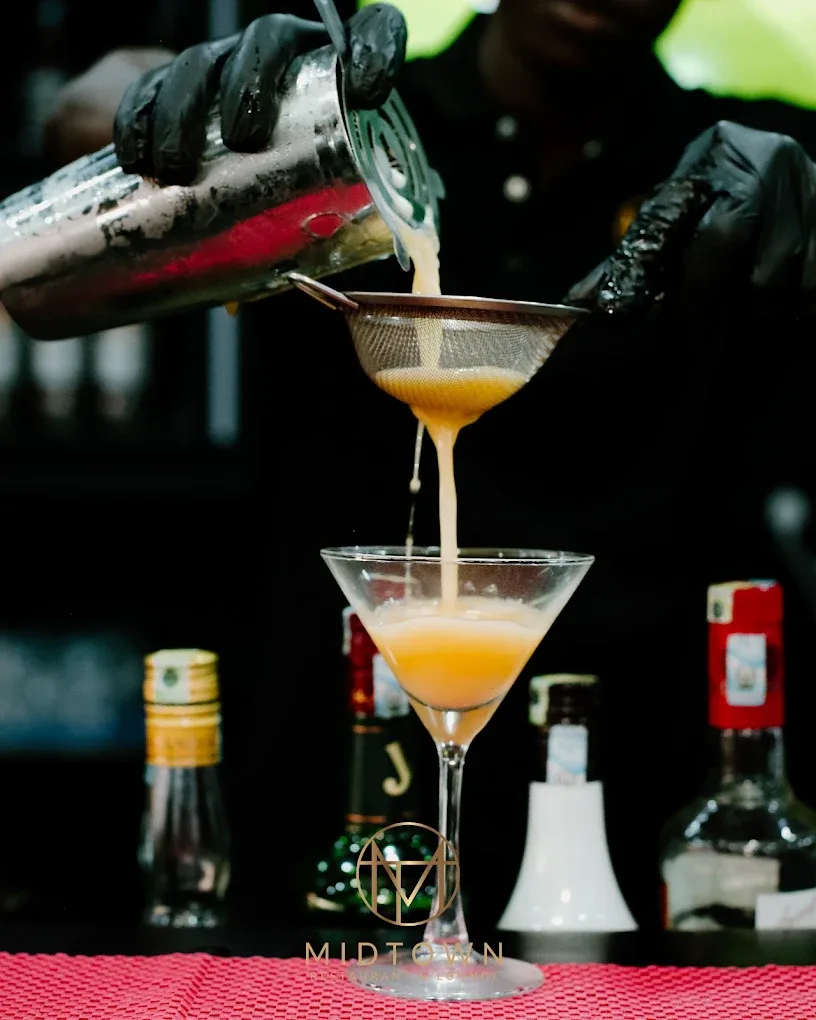
Finish The Day On The Roof
Once you have landed, changed money and made it to the peninsula, the roof is a good place to start. Midtown is in Masaki, and the sunset is at about half six every day of the year.
Common questions
- Can I get a visa on arrival in Tanzania?
- Most nationalities can, at Julius Nyerere International Airport, paid in US dollars. However, Tanzania actively encourages the online e-visa and the queue at arrivals can be long. Applying online in advance is the lower-stress route, and for some nationalities — including US citizens, who need the multiple-entry class — the online route avoids complications at the desk. Check the current requirement for your passport before you fly; this changes.
- How much is a taxi from Julius Nyerere airport to the city?
- Expect roughly 30,000 to 60,000 Tanzanian shillings to the city centre or the Msasani peninsula, depending on which terminal, the traffic and how well you negotiate. Airport taxis quote high to arrivals. Booking a Bolt or Uber from just outside the terminal is usually significantly cheaper, though some pickup restrictions apply at the airport itself.
- Which SIM card is best for tourists in Tanzania?
- Vodacom has the widest coverage nationally, which matters if you are heading to the parks. Airtel is a close second and often cheaper on data. Halotel is the budget option. Buy at an official branded shop, not a street stall — registration is mandatory and requires your passport plus a biometric fingerprint capture, so the shop has to do it properly.
- Should I bring US dollars to Tanzania?
- Bring some, and make them clean, post-2013, large denomination notes. Dollars are accepted for visas, park fees, the Zanzibar ferry and many hotels, and larger notes get a better rate. Torn, marked or older notes are routinely refused. For everyday spending use Tanzanian shillings withdrawn from a bank ATM.
- Do I need a yellow fever certificate for Tanzania?
- Only if you are arriving from, or have recently transited, a country with risk of yellow fever transmission. Arriving directly from Europe or North America, you generally do not. Arriving via a number of other African countries, you will be asked for it at the desk. Check your specific routing before you fly, including transits.