The Best Workspaces for Remote Workers in Dar es Salaam
Coworking spaces, cafés with real wifi, what the internet and power are actually like, and where the visa rules stand. A practical guide to working remotely from Dar es Salaam.
Dar es Salaam7 min readUpdated 16 September 2026
Dar es Salaam is not on the standard remote-work circuit, which is most of its appeal. It is a large, working coastal city rather than a nomad hub, the cost of living is low, the internet is much better than its reputation, and you are twenty minutes from islands and a couple of hours from Zanzibar.
What it does not have is a tidy, priced, published list of places to work. So here is one, based on checking each place rather than recycling an old listicle.
Coworking spaces
Worq, Masaki
- Area
- 50 Msasani Road, Masaki
- Hours
- Mon–Sun, 9am–9pm
- Power
- Backup generator
- Extras
- Studio room, parking, café
The most flexible option on the peninsula, and the one with the longest hours: 9am to 9pm, seven days a week, which matters if your team is in another time zone and your working day starts at noon.
Hot desks, dedicated desks, private rooms for five to ten people, a conference room, a meeting lounge and a soundproof studio room for recording, which is rare here and useful if you do calls, podcasts or video. There is a backup generator, secure parking, a café, storage and air conditioning.
Prices are not published, so email info@worq.co.tz or call +255 69 695 9338.
KOFISI Oysterbay
- Area
- Kilwa House 369, Toure Drive
- Size
- Over 20,000 sq ft
- Style
- Premium, ocean views
- Membership
- Cross-city UniKey
The high end. KOFISI runs more than 20,000 square feet on Toure Drive with ocean-view terraces, phone booths, a communal kitchen, breakout lounges and a coffee station, and it feels like a corporate office rather than a startup room.
Memberships run from flexible desks through dedicated desks to private and bespoke offices, and their UniKey membership gives access to their other centres, which include Nairobi and Lagos. Useful if you move around East Africa.
Again, no published prices: info@kofisi.africa.
ZO Spaces, three locations
- Sites
- New Bagamoyo Rd, The Slipway, Sea Cliff
- Power
- Backup power at all sites
- Type
- Coworking and private offices
ZO runs three Dar locations, which makes it the most geographically flexible: Plot 4 New Bagamoyo Road, The Slipway on Yacht Club Road, and ZO Seacliff on Toure Drive. Coworking and private offices, backup power everywhere, and a decent standard of fit-out.
The Slipway location is the one to look at if you want lunch, a bookshop, the weekend craft market and a boat to Bongoyo within walking distance of your desk.
Contact +255 620 212 171.
Seedspace, New Bagamoyo Road
- Area
- 7th floor, Tanzanite Park, 38 New Bagamoyo Road
- Type
- Startup-focused coworking
- Listed
- About $150/month shared desk
Part of the Seedstars network and aimed at entrepreneurs, so the value is the people in the room as much as the desk. Listed at around USD 150 a month for a shared desk and USD 300 for a private office, though that figure is from a third-party listing rather than Seedspace itself, so confirm it.
If you are building something rather than working for someone abroad, this and Buni Hub at COSTECH — a pre-incubator with several hundred members and a regular events programme — are where you will meet people.
Cafés that actually work
The list of Dar work cafés that circulates online dates from 2022 and has not aged well. These are the ones that still check out.
- The Ridge Cafe. The most consistently recommended for working: fast internet, good coffee, and a room set up for people who intend to stay a while.
- Wild Flour, Masaki. Artisan bakery and café, wifi, and quieter than most. Good for a morning of focused work.
- Kaffé Koffee, on Kaunda Drive in Oysterbay and at Singh Road. A Tanzanian roaster that roasts daily, with wifi and outdoor seating.
- Orchid Café, Haile Selassie Road. Open 07:30 to 23:00 with wifi and power sockets, which is the combination that matters.
- Karambezi Café at Sea Cliff. The ocean terrace is glorious and the wifi exists, but it is busy and social rather than a place to concentrate.
Check before you settle in. Woodberry Café in Masaki appears on every "work from here" list, but at least one listing says it has no wifi. Café wifi here changes without notice. Ask before you order, and carry a phone with data as a backup.
Internet, power and SIMs
- Fastest
- Yas, about 69 Mbps
- Cheapest
- Halotel
- Data
- About TSH 10,000 for 4GB/month
- Power
- No load shedding as of early 2026
Mobile data is the backbone of working here. Reported download speeds in Dar run from about 27 Mbps on Airtel and 42 on Vodacom up to around 69 Mbps on Yas, which took Ookla's fastest-network award for Tanzania at MWC 2026 for the third year running. Yas is the rebranded Tigo, so you will see both names.
A local SIM costs very little and bundles are cheap: Halotel sells about 4GB with calls and texts for TSH 10,000 a month, roughly four dollars, and around 8.5GB for TSH 20,000. Halotel is the cheapest and has the weakest coverage; Vodacom and Yas are the safe picks in the city. Buy at the airport or any operator shop, and bring your passport.
For a longer stay, fixed fibre is available from GOfiber, Blink and Hai.
Power is no longer the problem it was. Tanzania now generates about 4,075 MW against demand of roughly 2,071 MW, and there was no load shedding as of February 2026. Planned maintenance cuts still happen, announced in advance and sometimes lasting a full working day in the affected area. Work somewhere with a generator, and keep a power bank in your bag.
Where to base yourself
- Masaki if you want to walk to work, lunch and dinner. Highest rents, most convenience.
- Oyster Bay for quiet and space, and the shortest hop to KOFISI.
- Mikocheni for value, if you do not mind driving.
- Upanga if your work is in the city centre.
We have written about each of these, and the safety picture, in the safest neighbourhoods in Dar es Salaam.
A practical note on time zones: Dar is on East Africa Time, three hours ahead of UTC. That gives you a comfortable overlap with Europe, the Gulf and India, and a punishing one with the Americas. Plan the week accordingly.
The visa position
Tanzania does not have a digital nomad visa, although the government has discussed one. Most people arrive on a tourist visa, which costs around USD 50 for 90 days for most nationalities and can be extended once at the immigration office in Dar or Zanzibar to a total of 180 days.
A tourist visa does not permit you to work. Longer-term residence normally means a work permit, reported at roughly USD 3,000 for two years, usually arranged through an employer or your own registered company.
This is the part worth taking seriously rather than taking advice from a forum. Check your own position with Tanzanian immigration or an immigration lawyer before you travel.
And when you close the laptop
Full disclosure: Midtown is a rooftop restaurant in Masaki, not a coworking space. There is wifi, so an afternoon with a laptop and a drink works fine, but the roof is really at its best for the part after work: happy hour runs Monday to Thursday, 3:00 to 7:00pm with signature cocktails at TSH 10,000, the kitchen runs Jamaican and Swahili together, and the roof is open on all four sides for the sunset at about half past six. A five-minute Bolt from most of Masaki.
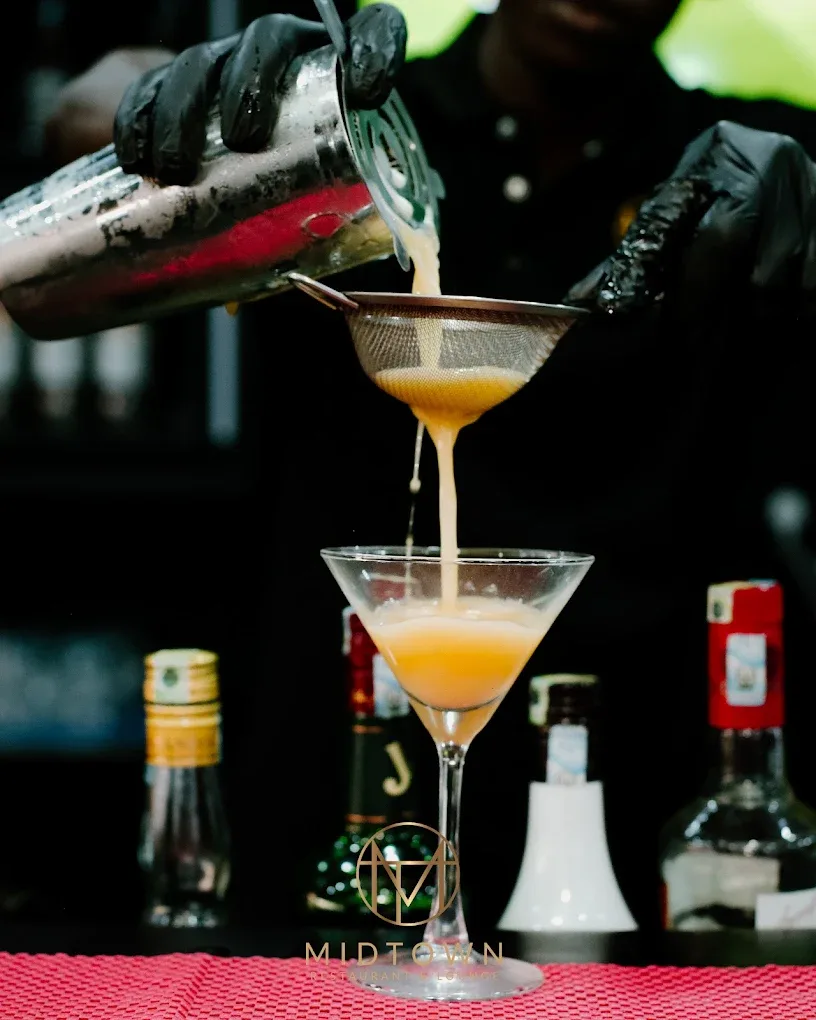
Finish The Day On The Roof
Sunset seating in Masaki, Jamaican and Swahili cooking, and the last of the light over the city. Message or call to book.
Common questions
- Is there good coworking in Dar es Salaam?
- Yes, and more than people expect. Worq in Masaki, KOFISI on Toure Drive in Oysterbay, and ZO Spaces across three sites including The Slipway and Sea Cliff are the main options, with Seedspace on New Bagamoyo Road aimed at startups. Nearly all of them are on or near the Msasani peninsula. The catch is that almost none of them publishes prices, so you have to call and ask.
- How much does coworking cost in Dar es Salaam?
- Nobody will tell you online. Worq, KOFISI and ZO Spaces all publish addresses and amenities but no rates, and the figures floating around on listing sites contradict each other. Seedspace is listed at roughly USD 150 a month for a shared desk and USD 300 for a private office, but even that is second-hand. Budget in that region, phone two or three places, and ask specifically about day passes, because the published memberships tend to be monthly.
- What is the internet like in Dar es Salaam?
- Better than most visitors expect. Reported mobile download speeds in the city run from around 27 Mbps on Airtel to nearly 69 Mbps on Yas, which was named Tanzania's fastest network on Ookla data at MWC 2026. Fixed fibre is available through providers like GOfiber, Blink and Hai. A local SIM is cheap: Halotel sells 4GB with calls for about TSH 10,000 a month. Get a SIM at the airport or any operator shop and you will rarely struggle.
- Are there power cuts in Dar es Salaam?
- Far fewer than there used to be. Tanzania now generates roughly 4,075 MW against national demand of about 2,071 MW, largely thanks to the Julius Nyerere hydropower project, and there was no load shedding as of early 2026. Planned maintenance outages still happen and are announced in advance. Work somewhere with a backup generator, which the main coworking spaces all have, and carry a power bank.
- Can you work remotely in Tanzania on a tourist visa?
- No. Tanzania has no digital nomad visa as of 2026, and a tourist visa does not permit employment. The tourist visa is around USD 50 for 90 days for most nationalities, extendable once at immigration in Dar or Zanzibar to a total of 180 days, and work permits are reported at roughly USD 3,000 for two years. If you intend to work while here, check your position with Tanzanian immigration or an immigration lawyer before you travel.