The Most Dangerous Areas in Dar es Salaam, and How to Stay Out of Trouble
What the UK, Canadian and US advisories and Tanzania's own crime statistics actually say about Dar es Salaam: which places and situations carry risk, when, and the habits that remove most of it.
Dar es Salaam7 min readUpdated 16 September 2026
Most articles with this title are written by people who have never been here, and they work by listing poor neighbourhoods and calling them dangerous. That is not useful, and it is not really true either: Temeke, Kariakoo and Ubungo are where a large share of this city lives, works and raises children, in complete safety, every day.
What is true is that certain situations carry real risk in Dar es Salaam, and government advisories are specific about them. So this guide follows the sources — the UK, Canadian and US advisories, and Tanzania's own crime statistics — and tells you what they actually say.
We should declare an interest: Midtown is a rooftop restaurant in Masaki. That is one of the areas the advisories name, and we have left it in.
What the advisories name
- UK
- Updated 19 May 2026
- Canada
- 9 September 2026
- US
- Level 3 since late 2025
- Scope
- Nationwide unless stated
The UK FCDO names, for Dar es Salaam specifically: the city centre, the Masaki and Oyster Bay peninsula, particularly Coco Beach, and Toure Drive, as places where tourists and foreign residents are targeted. It documents armed robbery throughout Tanzania, bag snatching by criminals on motorbikes and in cars, express kidnapping with forced ATM withdrawals, sexual assault including at beach resorts, and residential burglary.
Canada flags Coco Beach, Kariakoo Market and the Masaki/Oyster Bay peninsula for heightened caution, calls snatching from passing motorcycles and cars "frequent", and warns against walking after dark, dala dalas and motorcycle taxis.
The United States keeps Tanzania at Level 3, reconsider travel, raised in late 2025, citing unrest, crime, terrorism and the targeting of gay and lesbian people, and noting that police have limited resources to respond to serious crime.
Notice what the two lists have in common. The places named are not the poorest parts of the city. They are the places where visitors carry valuables.
Kariakoo and the crowds
- Area
- Kariakoo, Ilala
- What
- The largest market in the city
- Risk
- Pickpocketing, phone snatching
- When
- Worst after dark and at weekends
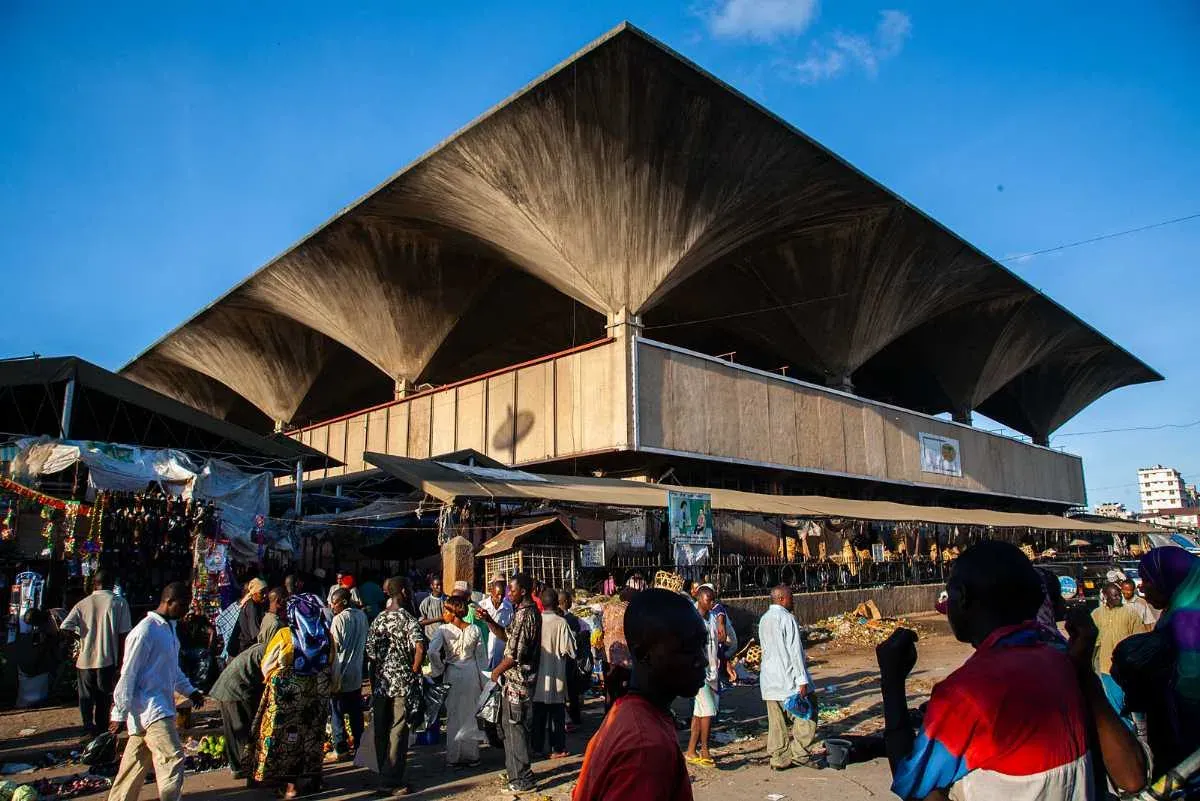
Kariakoo is the commercial heart of Tanzania, several blocks of market spilling into the surrounding streets, now trading around the clock. It is also the single most consistently named place for pickpocketing and phone theft in the city, for the obvious reason: it is the densest crowd in the country, with narrow lanes where people move shoulder to shoulder.
It is worth seeing. Go late morning or early afternoon on a weekday, carry a little cash and nothing else, keep your bag in front of you, keep your phone in your pocket rather than out for photos, and dress modestly. Do not bring anything you would mind losing, and do not go after dark.
The same applies at bus terminals, on crowded downtown streets, and at the ferry terminal.
The peninsula, and why it is on the list
It surprises people that Masaki, Oyster Bay, Coco Beach and Toure Drive appear in the same advisories as the market. The reason is targeting rather than territory: these are where foreign residents and visitors concentrate, so this is where a motorbike rider looking for a phone or a handbag goes to find one.
Coco Beach is the specific spot both the UK and Canada name. In daylight, at the weekend, in the middle of a Tanzanian family crowd, it is one of the best things about this city. Alone, after dark, on a quiet stretch of sand, it is not.
Toure Drive is the coastal road through Masaki. It is a pleasant walk, and it is also where carjackings and muggings have been reported. Walk it in daylight, facing the traffic.
After dark, anywhere
This is the most important section, and the least geographic.
Nearly every serious incident described in the advisories involves someone on foot at night, or in a vehicle they did not choose. The UK advice is blunt: avoid walking or cycling at night or alone. Canada says do not walk outside after dark.
- Do not walk at night, including short distances in "good" areas.
- Use Bolt or Uber, both of which work across the city and cost a few dollars.
- Do not take dala dalas or boda bodas (motorcycle taxis). Both advisories warn about them, for accidents as much as crime.
- Do not get into a car that approaches you. Order it yourself.
- Do not drive outside major towns after dark, which is standard advice throughout Tanzania.
Thefts from vehicles
Smash-and-grab at junctions is a recognised pattern here. In slow traffic, keep windows up and doors locked, and keep bags, phones and laptops in the footwell or the boot rather than on the passenger seat where they can be seen.
Express kidnapping and ATMs
The FCDO documents cases of people being seized, threatened and forced to withdraw cash from ATMs, with some made to send up to £5,000 via Western Union. It is not common, but it shapes sensible habits: use ATMs inside banks or shopping malls, in daylight, draw what you need rather than repeatedly topping up on the street, and never let a stranger "help" you at a machine.
Demonstrations and the political situation
Violent unrest followed the general election of 29 October 2025, concentrated in Dar es Salaam and also affecting Arusha and Mwanza. There was a nationwide overnight curfew and a five-day internet shutdown. The death toll is heavily disputed: a government-appointed commission reported 518 deaths in April 2026, the opposition party Chadema has claimed between 1,000 and 2,000, and other figures have been published both above and below that range.
Protests against the disputed result were banned in December 2025, and there has been a continued security presence since. That aftermath is the main reason the US advisory sits at Level 3.
For a visitor, the guidance from every advisory is the same and is worth following literally: avoid demonstrations, avoid crowds that gather for any political reason, do not film them, follow local media, and be aware that internet and messaging access can be restricted at short notice.
What the statistics do and do not show
Tanzania's National Bureau of Statistics recorded 46,334 major criminal offences nationally in 2025, with Kinondoni the highest-ranking district in the country at 3,407, ahead of Mara, Tanga, Kilimanjaro and Pwani.
Kinondoni is the district that contains Masaki, Oyster Bay and Mikocheni — and also bus terminals, major transit roads and dense, fast-growing residential areas. It has fewer residents than Ilala, Temeke or Ubungo, so the ranking is not simply a headcount.
Asked to explain it, the regional police commander called Kinondoni "a gateway for movement into Dar es Salaam, and that makes it a target zone for criminal activity". A security analyst pointed to connecting roads, informal settlements, bus terminals and nightlife. A sociologist noted that a large share of residents are short-term tenants, which weakens the neighbourly ties that normally deter crime.
That is the whole lesson of district-level crime data: it describes movement and density, not the character of a place or the people in it.
The short version
Dar es Salaam is a large, busy city where ordinary caution goes a very long way. In practice:
- Daylight, busy streets, Bolt at night. That combination removes most of the risk described in every advisory.
- Phone away, bag in front, windows up.
- Cash from ATMs inside banks and malls.
- Nothing in a crowd that you cannot afford to lose.
- Stay away from demonstrations entirely.
For the other side of this, where people live and why, see the safest neighbourhoods in Dar es Salaam. Advisories change, so check gov.uk, travel.gc.ca and travel.state.gov yourself before you travel.
Finish The Day On The Roof
Sunset seating in Masaki, Jamaican and Swahili cooking, and the last of the light over the city. Message or call to book.
Common questions
- What are the most dangerous areas in Dar es Salaam?
- Government advisories name situations more than districts. The UK and Canada both single out the city centre, Kariakoo Market, Coco Beach and the Masaki and Oyster Bay peninsula, including Toure Drive, as places where visitors are targeted, mostly for bag and phone snatching. Secondary travel-safety sources add Kariakoo, Tabata, Temeke and outer parts of Kinondoni as higher-crime at night. Millions of people live in all of these areas safely, so the useful question is what you are doing and at what time, not which name is on the map.
- Is Kariakoo dangerous?
- Kariakoo is the biggest market in the city and trades around the clock, and it is also the place most consistently named for pickpocketing and phone snatching, simply because it is the densest crowd in Tanzania. Visiting in the late morning or early afternoon on a weekday, with your phone away, your bag in front of you and nothing valuable on you, is a normal thing to do. Going after dark, or standing in the middle of it filming on a new phone, is not.
- Is it safe to walk at night in Dar es Salaam?
- No, and every government advisory says so directly. The UK advice is to avoid walking or cycling at night or alone anywhere in Tanzania. Nearly every incident these advisories describe involves someone on foot after dark, or in an unlicensed taxi. Ride-hailing is cheap here, so there is no real reason to walk at night.
- What is express kidnapping and does it happen in Dar es Salaam?
- It is where someone is seized, threatened and forced to withdraw cash at ATMs or transfer money before being released. The UK FCDO documents it happening in Tanzania, including cases where victims were made to transfer up to £5,000 by Western Union. It is rare but real, and the practical defences are to use ATMs inside banks and malls in daylight, to use ride-hailing apps rather than cars that approach you, and not to get into a vehicle you did not order.
- Is Dar es Salaam safe after the 2025 election unrest?
- The violent protests that followed the October 2025 election have ended, and day-to-day life in the city resumed, but the aftermath is why the US advisory sits at Level 3. Protests against the disputed result were banned in December 2025, there is a continued security presence, and the death toll remains heavily disputed, from a government commission's figure of 518 to opposition claims in the thousands. For a visitor the practical advice is simple: stay away from demonstrations and crowds, and expect that internet access could be disrupted during any political flashpoint.